7 min read
How Does an AI Receptionist Work? A Practical Guide for Home Service Businesses
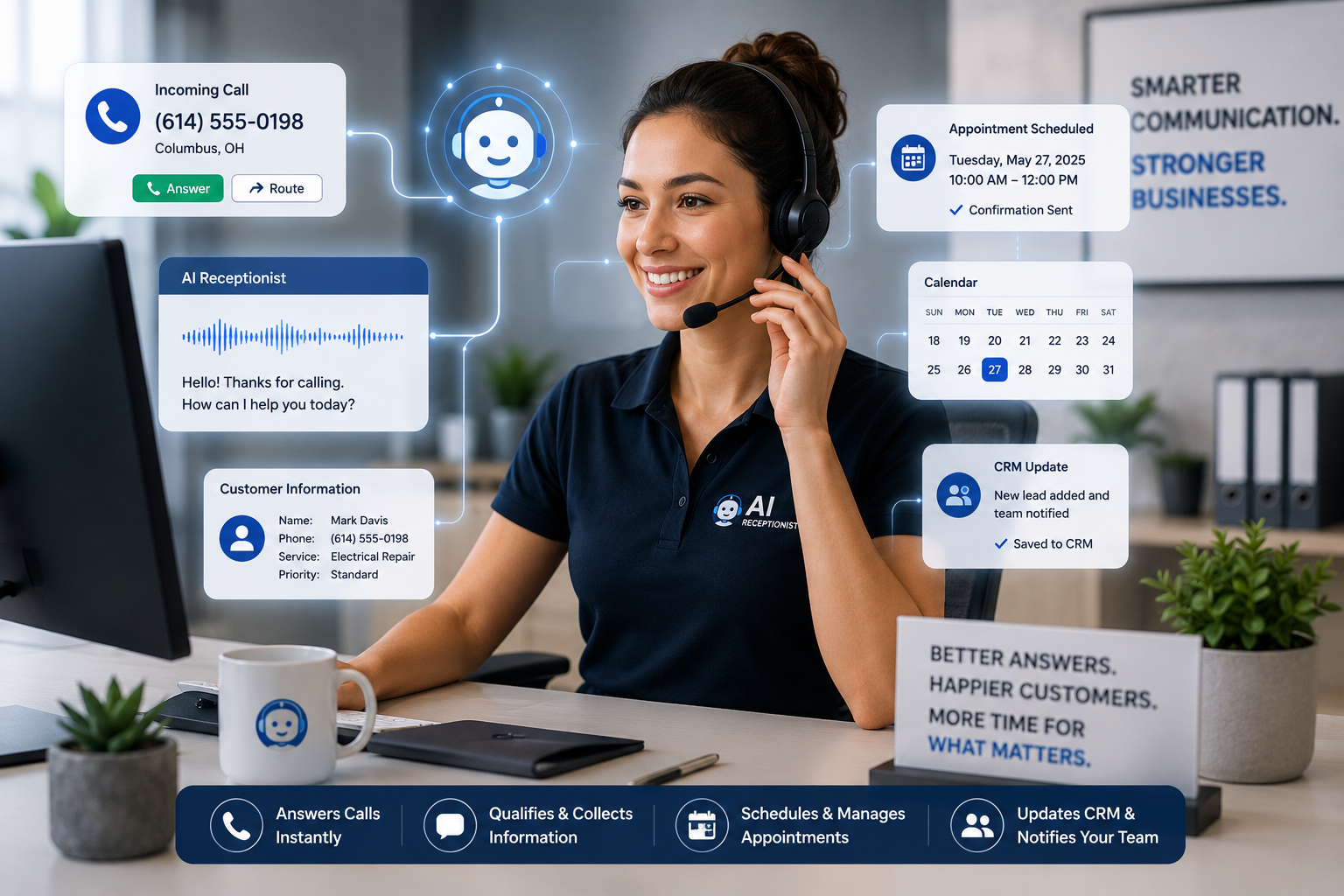
Every missed call represents a missed opportunity.
Whether you're climbing onto a roof, installing an electrical panel, repairing an HVAC system, or responding to an emergency plumbing call, you can't always answer the phone.
That's where an AI receptionist comes in.
Instead of sending callers to voicemail, an AI receptionist answers immediately, communicates naturally with customers, gathers information, and helps keep your business moving—even when your team is busy serving customers.
Understanding how it works helps business owners see why AI has become such a valuable tool for modern home service companies.
It Starts the Moment the Phone Rings
When a customer calls your business, the AI receptionist answers using the greeting you've configured for your company.
Rather than simply playing a recorded message, it listens to what the customer says and responds conversationally.
The goal is to create a natural interaction that feels professional, helpful, and efficient.
Understanding Customer Requests
Modern AI can recognize what customers are trying to accomplish.
For example, a customer might say:
- "I'd like to schedule an estimate."
- "I need an electrician today."
- "What are your business hours?"
- "Do you service my area?"
- "I'd like to reschedule my appointment."
Instead of forcing customers through a complicated phone menu, the AI identifies their intent and responds appropriately based on the information you've provided.
Collecting Important Information
As the conversation continues, the AI can gather information your business needs, including:
- Customer name
- Phone number
- Property address
- Type of service requested
- Preferred appointment time
- Additional notes
That information can then be organized according to your existing business processes.
Scheduling Appointments
One of the biggest advantages of an AI receptionist is appointment scheduling.
Depending on your system configuration, the AI may be able to:
- Check appointment availability
- Schedule new appointments
- Confirm existing appointments
- Reschedule appointments
- Send confirmations
- Send reminder messages
Customers receive immediate assistance without waiting for someone to return a phone call.
Answering Common Questions
Many customer phone calls involve routine questions.
Examples include:
- What areas do you serve?
- What services do you offer?
- What are your business hours?
- Do you provide emergency service?
- How do I prepare for my appointment?
Rather than requiring employees to answer the same questions repeatedly, AI can provide fast, consistent responses.
Knowing When to Involve Your Team
AI isn't designed to replace good judgment.
When a customer has a complex request or needs personal assistance, the AI can follow the process you've established.
Depending on your workflow, it can:
- Transfer the call
- Take a detailed message
- Notify the appropriate employee
- Escalate urgent situations
This ensures customers continue receiving the level of service they expect.
Why It Benefits Home Service Businesses
Home service companies often operate away from the office.
Technicians spend their day helping customers—not answering phones.
An AI receptionist keeps communication moving while allowing your team to stay focused on the work they're already doing.
The result is:
- Fewer missed opportunities
- Faster response times
- Better customer experience
- More consistent communication
- Less administrative workload
Key Takeaways
An AI receptionist works by answering customer calls, understanding requests, gathering information, scheduling appointments, answering common questions, and routing conversations according to your business rules.
Rather than replacing employees, it supports your team by handling repetitive communication so they can focus on serving customers.
For many home service businesses, it's one of the simplest ways to improve customer responsiveness while reducing everyday administrative work.
